Jason Rohrer’s art games
Topic: Jason Rohrer’s art games
Student name: Mak Hoi Ying
Student number:60174231
 |
| https://th.bing.com/th/id/R.b188f936411f872b22767eec94bb6914?rik=mR6WXdvsrJmePA&riu=http%3a%2f%2fridge-edc-s3-new.s3.us-east-2.amazonaws.com%2fwp-content%2fuploads%2f2023%2f09%2f12210418%2f154f72b18d36e3.jpg&ehk=qlwUW6UzEwiHc%2b72aFtgF9dO20zmSqH8pPsVy1x7354%3d&risl=&pid=ImgRaw&r=0 |
Passage
In Passage, I witnessed the main character meeting a partner and walking through life together. Over time, their appearances changed—one grew white hair, the other became bald. Later, the partner passed away, leaving the character to continue alone until he eventually died as well. This experience made me feel the fragility of life and the value of companionship. As art, the game does not rely on player choice to create meaning; instead, it uses the inevitability of aging and death to symbolize life itself. The lack of choice becomes the design’s strength, turning inevitability into a poetic metaphor. The player’s role is not to alter the outcome but to experience and reflect on time, loss, and companionship.
One Hour One Life
 |
| https://cdn.akamai.steamstatic.com/steam/apps/595690/capsule_616x353.jpg?t=1632317872 |
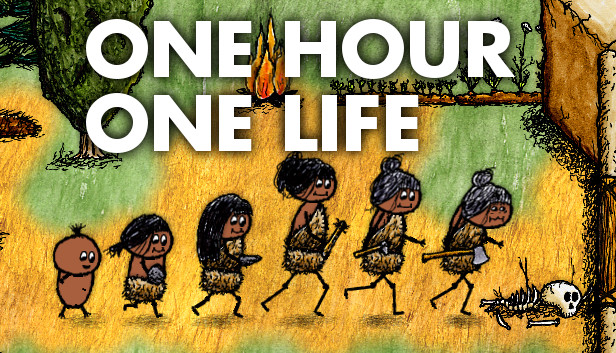
When I played One Hour One Life, I started as a baby dependent on my mother, gradually grew up, learned to gather food, craft tools, and help build a village. Within just one hour, I experienced birth, growth, cooperation, aging, and eventually death. This design made me feel the limits of life and realize how even small actions can affect the whole community. As art, the game is not just about survival but turns “one life per hour” into a form of performance art: death is inevitable, but cooperation leaves traces, allowing civilization to continue. It made me reflect on the relationship between the individual and the collective, with cooperation becoming the central theme of the work.
Gravitation
 |
| https://hcsoftware.sourceforge.net/gravitation/screen.png |
 |
| https://worldarchitecture.org/cdnimgfiles/extuploadb/2016gameworldsjasonrohrer.jpg |



留言
張貼留言